
Introduction
Mechanical forces are central to musculoskeletal health and rehabilitation. Manual therapy, joint mobilization, gait retraining, and progressive exercise loading all rely on the body’s ability to sense and respond to mechanical input. This biologic process, known as mechanotransduction, explains how physical forces applied at the tissue level translate into cellular and molecular responses that drive adaptation.
Vibration therapy represents a controlled mechanical stimulus capable of engaging mechanotransduction pathways across muscle, vascular, and skeletal systems. Increasingly, research shows that both high-energy vibration and low-intensity vibration can influence cellular behavior through distinct but complementary mechanisms. Understanding these pathways allows clinicians to better match vibration parameters to patient tolerance and therapeutic goals.
Mechanotransduction: How Cells Sense Mechanical Forces
Mechanotransduction: How Cells Sense Mechanical Forces
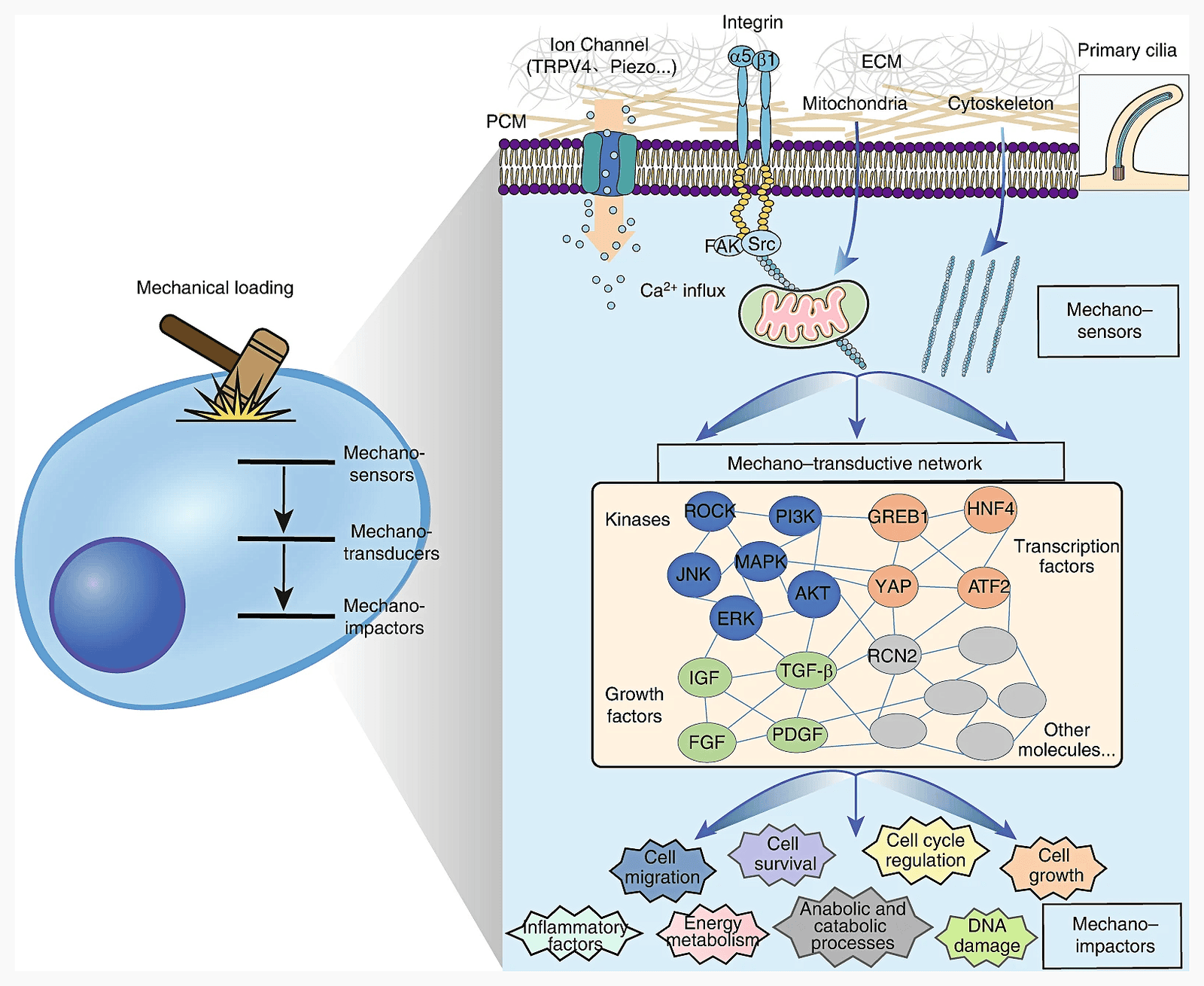
Mechanotransduction refers to the conversion of mechanical forces into biochemical signals. Cells detect mechanical input through integrins, stretch-activated ion channels, and the cytoskeleton, which transmits force toward the nucleus and alters gene expression [1–3]. These pathways regulate protein synthesis, inflammatory signaling, mitochondrial activity, and tissue remodeling.
In musculoskeletal tissues, mechanotransduction governs muscle hypertrophy, connective tissue adaptation, angiogenesis, and bone remodeling [1,4,14]. Vibration therapy leverages these same biologic systems but does so using oscillatory forces rather than static or repetitive loading.
How Vibration Becomes a Cellular Signal
How Vibration Becomes a Cellular Signal
Mechanical vibration introduces small, rapid accelerations that cause micro-deformation of muscle fibers, blood vessels, and bone matrix. These forces generate membrane stretch and fluid shear stress, activating mechanosensitive ion channels and intracellular signaling cascades [2–4].
Downstream effects include increased intracellular calcium, activation of MAPK and PI3K/Akt signaling, and changes in gene expression related to nitric oxide production, growth factor release, and bone morphogenetic proteins [2–4,14]. Clinical outcomes depend heavily on vibration dose. Frequency, amplitude, posture, and exposure duration determine whether vibration primarily affects neuromuscular activation, vascular function, or deeper cellular signaling processes [5,7,8].
Nuclear Mechanosensitivity and the Role of the LINC Complex
Nuclear Mechanosensitivity and the Role of the LINC Complex
Beyond membrane-level mechanosensing, the nucleus itself functions as a mechanosensitive organelle. Central to this process is the LINC (Linker of Nucleoskeleton and Cytoskeleton) nuclear complex, which physically connects the cytoskeleton to the nuclear envelope via SUN and nesprin proteins.
The LINC complex enables mechanical forces applied at the cell surface to be transmitted directly to the nucleus, influencing chromatin organization, nuclear stiffness, and transcriptional activity [26]. This mechanism is especially relevant to low-intensity vibration, where mechanical forces may be insufficient to cause visible tissue deformation but are still capable of producing meaningful cellular responses.
Disruption of LINC connectivity impairs mechanosensitive gene expression and reduces osteogenic signaling, while intact LINC complexes enhance nuclear strain transfer and mechanically regulated transcription [26].
Low-Intensity Vibration and Cellular Adaptation
Low-Intensity Vibration and Cellular Adaptation
Low-intensity or low-magnitude vibration produces acceleration signals that are well tolerated by older adults and individuals with limited load capacity. Despite minimal perceptible movement, these signals can activate intracellular and nuclear mechanotransduction pathways through the LINC complex.
Low-intensity vibration has been shown to influence mesenchymal stem cell differentiation toward osteogenic rather than adipogenic lineages, maintain cytoskeletal tension and nuclear integrity, and regulate gene expression relevant to bone and muscle health [26]. This helps explain why low-magnitude, high-frequency vibration demonstrates biologic effects despite very small displacement amplitudes.
Neuromuscular Activation and Functional Loading
Neuromuscular Activation and Functional Loading
At higher amplitudes or frequencies, vibration therapy engages neuromuscular pathways through the tonic vibration reflex and altered motor unit recruitment [7,8,20]. Increased electromyographic activity has been demonstrated in lower-limb and trunk musculature, particularly in the 20–40 Hz range [8,20,24].
Physical therapists may integrate vibration into balance training, early strengthening, and gait re-education. Chiropractors may use vibration to enhance proprioception and postural control alongside spinal stabilization strategies. Podiatrists may apply vibration to improve intrinsic foot muscle activation and sensorimotor input in patients with balance deficits or neuropathy.
Circulation and Microvascular Effects
Circulation and Microvascular Effects
Vibration induces rhythmic muscle contractions and cyclic shear stress on blood vessels, influencing microcirculation and endothelial function. Acute increases in blood flow and muscle oxygenation have been observed during and after vibration exposure [5,13]. Improvements in flow-mediated dilation and endothelial progenitor cell mobilization have also been reported following vibration therapy [10,11,21].
These effects may support tissue healing and metabolic exchange, particularly in populations with compromised microvascular function.
Bone Metabolism and Skeletal Health
Bone Metabolism and Skeletal Health
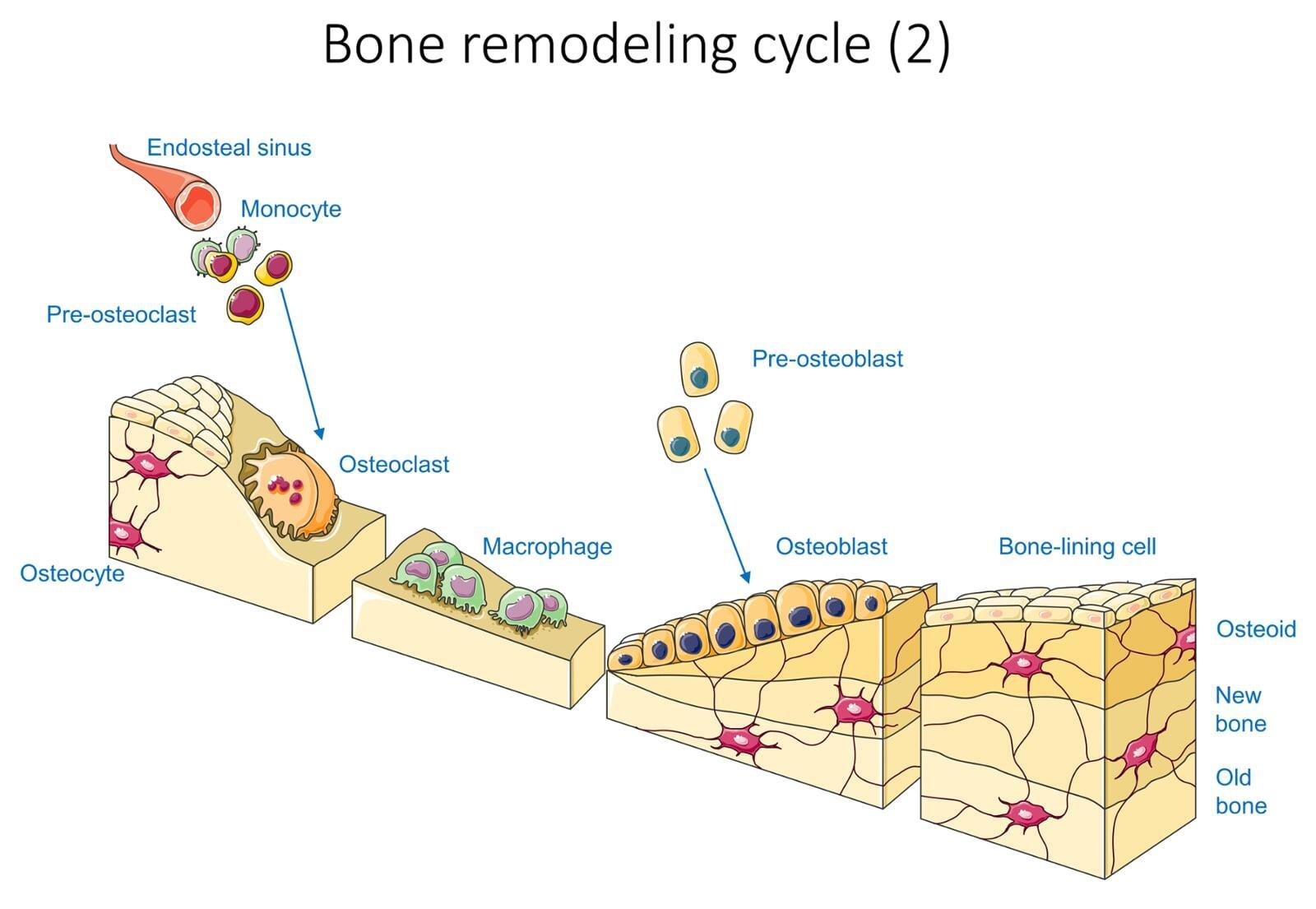
Bone is highly mechanosensitive, with osteocytes acting as primary mechanosensors that translate mechanical forces into signals regulating osteoblast and osteoclast activity [14–16,22]. Both high-energy and low-intensity vibration have demonstrated effects on bone signaling pathways.
Low-magnitude vibration may help attenuate bone loss in populations with limited weight-bearing tolerance, including older adults and individuals recovering from prolonged immobilization [17,18,23]. The LINC nuclear complex plays a critical role in these responses by enabling nuclear-level mechanotransduction in bone cells [26].
Clinical Takeaways for Healthcare Providers
Clinical Takeaways for Healthcare Providers
Mechanotransduction explains the biologic basis for vibration therapy across muscle, vascular, and skeletal systems. High-energy vibration primarily enhances neuromuscular activation and proprioception. Low-intensity vibration engages nuclear mechanosensitivity through the LINC complex, influencing cellular behavior with minimal tissue strain. Vibration therapy should complement, not replace, active rehabilitation and progressive loading. Careful patient selection and dosing are essential, particularly in older adults and those with reduced load tolerance.
References
References
- Dunn SL, Heilig CW, Bao J, et al. Mechanotransduction: Relevance to physical therapist practice—understanding our ability to affect genetic expression through mechanical forces. Phys Ther. 2016;96(5):712–721.
- Wang N, Tytell JD, Ingber DE. Mechanotransduction at a distance: mechanically coupling the extracellular matrix with the nucleus. Rev Physiol Biochem Pharmacol. 2017;169:37–82.
- Martino F, Perestrelo AR, Vinarský V, Pagliari S, Forte G. Cellular mechanotransduction: from tension to function. Front Physiol. 2018;9:824.
- Di X, Wang Y, Han D, et al. Cellular mechanotransduction in health and diseases. Signal Transduct Target Ther. 2023;8(1):152.
- Games KE, Sefton JM. Whole-body vibration influences lower extremity circulatory and neurological function. J Athl Train. 2015;50(6):585–593.
- Liu C, Sun Y, Wang L, et al. The central mechanotransducer in osteoporosis pathogenesis: Piezo1 and its signaling pathways. Bone Res. 2025;13(1):23.
- Yang Z, Li Z, Zhu Q, et al. Effects of different vibration frequencies on muscle strength: a randomized trial of whole-body vibration training. Sci Rep. 2021;11(1):53.
- Marín PJ, Santos-Lozano A, Santin-Medeiros F, et al. The effects of whole-body vibration on electromyographic activity and muscle performance. J Strength Cond Res. 2021;35(4):1039–1047.
- Yin Y, Mu J, Wang H, et al. Does whole-body vibration training have a positive effect on neuromuscular performance? Front Hum Neurosci. 2023;16:1076665.
- Aoyama A, Uematsu A, Shibata K, et al. Acute effects of whole-body vibration training on endothelial function in elderly patients with cardiovascular disease. Int Heart J. 2019;60(4):834–841.
- Jawed Y, Braverman J, Hsu JD, et al. Whole-body vibration training increases stem/progenitor cells and skin blood flow in humans. Mil Med. 2020;185(Suppl 1):404–411.
- Haffner-Luntzer M, Kovtun A, Lackner I, et al. Effects of low-magnitude high-frequency vibration on bone healing and remodeling. Biochim Biophys Acta Mol Basis Dis. 2018;1864(12):2293–2301.
- Steppe L, Neumeyer F, Klein-Nulend J, et al. Influence of low-magnitude high-frequency vibration on bone cells in vitro and in vivo. Front Bioeng Biotechnol. 2020;8:595139.
- Cao S, Liu J, Rong Y, et al. The effect of whole-body vibration exercise on bone metabolism and density in postmenopausal women. Medicine (Baltimore). 2021;100(19):e25791.
- Wang L, You X, Zhang L, et al. Mechanical regulation of bone remodeling. Bone Res. 2022;10(1):54.
- Sun W, Chi S, Li Y, et al. The mechanosensitive ion channel Piezo1 is required for bone formation. Nature. 2019;573:225–229.
- Rubin C, Recker R, Cullen DM, et al. Prevention of bone loss in postmenopausal women using low-level whole body vibration. Lancet. 2004;364(9446):1943–1950.
- von Stengel S, Kemmler W, Engelke K, et al. Effect of whole-body vibration on neuromuscular and functional performance. J Musculoskelet Neuronal Interact. 2011;11(2):145–155.
- Rittweger J. Vibration as an exercise modality. Eur J Appl Physiol. 2010;108(5):877–904.
- Ritzmann R, Kramer A, Gollhofer A. The neuromuscular effects of vibration exercise. Eur J Appl Physiol. 2013;113(6):1645–1654.
- Maloney-Hinds C, Petrofsky JS, Zimmerman G. The effect of vibration frequency on skin blood flow. Med Sci Monit. 2008;14(5):CR237–CR244.
- Li X, Han L, Nookaew I, et al. Stimulation of Piezo1 by mechanical signals promotes bone anabolism. Proc Natl Acad Sci USA. 2019;116(28):14138–14144.
- Judex S, Rubin CT. Is bone formation induced by low-level whole body vibration? Exerc Sport Sci Rev. 2010;38(4):191–196.
- Saxena H, Filho RF, Raza S, et al. Effect of multi-frequency whole-body vibration on muscle activation. Sensors (Basel). 2020;20(9):2575.
- Lau E, Al-Dujaili S, Guenther A, et al. Mechanical loading and endothelial progenitor cell mobilization. Bone. 2010;46(6):1443–1452.
- Uzer G, Rubin CT, Rubin J. Cell mechanosensitivity is enabled by the LINC nuclear complex. Curr Mol Biol Rep. 2016;2(1):36–47.