
Neuromuscular re-education is a cornerstone of rehabilitation, supporting the restoration of coordinated movement, balance, and functional strength following injury, neurological insult, or prolonged inactivity. These challenges are especially pronounced in patients with sarcopenia, age-related deconditioning, or chronic disease, where declines in muscle mass are accompanied by impaired motor unit recruitment, diminished proprioceptive input, neuromuscular junction degeneration, and mitochondrial dysfunction.
In these populations, traditional resistance-based exercise alone may be insufficient or poorly tolerated. Low-intensity vibration has emerged as a clinically relevant intervention that delivers mechanical signals capable of stimulating neuromuscular and cellular pathways without excessive joint loading or metabolic demand. Recent evidence demonstrates that low-magnitude, high-frequency vibration attenuates sarcopenia by improving mitochondrial quality control and neuromuscular signaling, even in aging and frail tissue (1). For chiropractors, physical therapists, and podiatrists managing older adults or medically complex patients, vibration platforms offer a practical method to reintroduce meaningful neuromuscular input and support motor re-education when conventional exercise is limited.
How Vibration Stimulates Proprioceptors and Motor Pathways
Effective neuromuscular control depends on continuous afferent feedback from muscle spindles, Golgi tendon organs, joint mechanoreceptors, and cutaneous receptors. Injury, immobilization, neuropathy, and aging blunt this sensory feedback loop, contributing to delayed muscle activation, impaired balance reactions, and inefficient movement strategies. Whole-body vibration (WBV) addresses these deficits through rapid mechanical oscillations that directly stimulate proprioceptive receptors and enhance sensory-motor integration.
Muscle Spindles: Primary Sensors for Proprioceptive Feedback
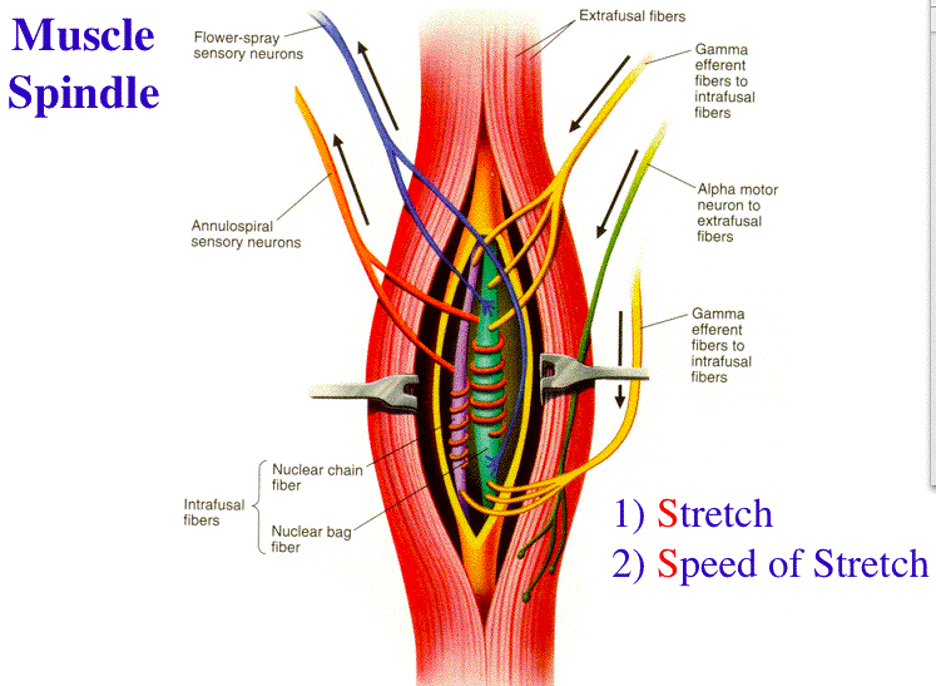
Muscle spindles respond strongly to vibratory input, increasing Ia afferent discharge and improving neuromuscular activation.
Neurophysiological studies demonstrate that vibration markedly increases firing rates of muscle spindle Ia afferents, enhancing stretch reflex sensitivity and alpha motor neuron excitability (2). In sarcopenic and deconditioned muscle, where spindle sensitivity and reflex responsiveness are diminished, this mechanism supports earlier and more coordinated muscle activation during rehabilitation.
Golgi Tendon Organs: Modulating Tension and Protective Reflexes
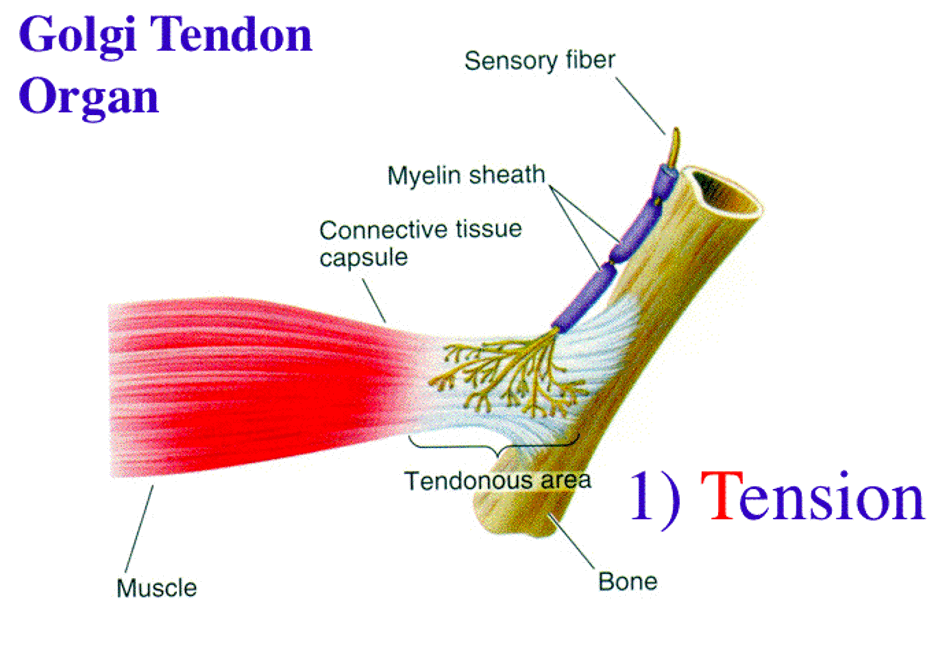
Golgi tendon organs help regulate tension and reflex pathways, and vibration can modulate their responsiveness during rehabilitation.

While Golgi tendon organs typically function as protective inhibitory sensors, controlled vibration appears to recalibrate abnormal tension signaling seen after injury or disuse. This modulation supports more accurate force output during strengthening, gait training, and closed-chain functional activities.
Central Integration and Proprioceptive Pathways

Beyond peripheral receptor activation, vibration enhances sensory input at the spinal and cortical levels. Increased afferent signaling improves motor neuron pool excitability and supports corticomotor plasticity, a critical factor in motor relearning following orthopedic injury or neurological impairment (3,4).
Complementing Therapeutic Exercise in Clinical Practice
Vibration platforms are not intended to replace therapeutic exercise, but to amplify its neuromuscular effects. Studies show that exercises performed with vibration produce greater electromyographic activity and motor unit recruitment compared to identical exercises performed without vibration (5). This enhanced neuromuscular stimulus is particularly valuable for patients with sarcopenia, arthrogenic muscle inhibition, or chronic weakness, where traditional loading strategies may not adequately engage stabilizing musculature.
Improved kinesthetic awareness and sensory feedback also support motor learning, helping patients develop more efficient and durable movement patterns that transfer to functional tasks.
Improvements in Postural Control and Balance
Improvements in Postural Control and Balance
Emerging evidence indicates that low-magnitude, high-frequency vibration exerts clinically meaningful effects on postural control and balance by preserving neuromuscular integrity and enhancing sensory-motor coordination. In aging and sarcopenic populations, degeneration of the neuromuscular junction contributes to delayed muscle activation, impaired balance reactions, and increased fall risk. Research demonstrates that low-intensity vibration can prevent age-related neuromuscular junction degeneration, supporting more effective postural responses and balance control (6).
Mechanistically, vibration increases afferent sensory input and improves neuromuscular signaling efficiency, resulting in better motor unit synchronization and force modulation. Experimental models show that extremely low-magnitude mechanical signals enhance neuromuscular dynamics and strength behavior even in the absence of high mechanical loading (7). Clinically, this heightened sensory demand allows practitioners to safely progress patients through increasingly complex balance and stability programs, particularly in older adults, neurologically impaired individuals, and those recovering from lower-extremity dysfunction.
Supporting Gait Training and Lower-Extremity Rehabilitation
Gait retraining relies on accurate proprioceptive input and coordinated muscle activation across the lower extremity. Vibration platforms can be used as a preparatory intervention or integrated directly into weight-bearing exercises to enhance gait outcomes.
Short bouts of vibration prior to gait training can prime neuromuscular pathways, improving weight acceptance, stance stability, and limb coordination. Weight-shift drills, mini-squats, and closed-chain exercises performed on vibration platforms help restore symmetrical loading patterns, particularly beneficial for patients with foot and ankle pathology, knee dysfunction, peripheral neuropathy, or post-surgical deficits.
In neurological populations, including individuals with stroke or Parkinson’s disease, vibration-assisted interventions have been associated with improvements in stride length, balance, and functional mobility (8,9).
Clinical Recommendations
- Use low-magnitude vibration (typically 20–35 Hz) for sarcopenic, frail, or deconditioned patients.
- Pair vibration with closed-chain strengthening, balance drills, or gait-preparatory exercises.
- Adjust joint angles and stance width to target specific proprioceptive systems.
- Monitor fatigue, compensatory strategies, and patient tolerance.
Conclusion
Whole-body vibration platforms provide an evidence-based adjunct to neuromuscular re-education, particularly for patients with sarcopenia, deconditioning, or impaired motor control. By stimulating proprioceptors, preserving neuromuscular junction integrity, enhancing sensory-motor integration, and amplifying the effects of therapeutic exercise and gait training, vibration offers chiropractors, physical therapists, and podiatrists a practical tool to improve functional outcomes across diverse patient populations.
References
- Long YF, Cui C, Wang Q, Xu Z, Chow SKH, Zhang N, Wong RMY, Chui ECS, Schoenmehl R, Brochhausen C, Rubin CT, Li G, Qin L, Yang AZ, Cheung WH. Low-magnitude high-frequency vibration attenuates sarcopenia by modulating mitochondrial quality control via inhibiting miR-378. J Cachexia Sarcopenia Muscle. 2025;16:e13740.
- Burke D, Hagbarth KE, Löfstedt L, Wallin BG. The responses of human muscle spindle endings to vibration during isometric contraction. J Physiol. 1976;261(3):695–711.
- Ritzmann R, Kramer A, Gruber M, Gollhofer A, Taube W. EMG activity during whole-body vibration: motion artifacts or stretch reflexes? Eur J Appl Physiol. 2010;110(1):143–151.
- Marín PJ, Rhea MR. Effects of vibration training on muscle power: a meta-analysis. J Strength Cond Res.2010;24(3):871–878.
- Di Giminiani R, Masedu F, Tihanyi J, Scrimaglio R, Valenti M. Interaction between body posture and vibration frequency on neuromuscular activation. J Electromyogr Kinesiol. 2013;23(1):245–251.
- Boa Z, Cui C, Liu C, Long YF, Wong RMY, Chai S, Qin L, Rubin CT, Yip BHK, Xu Z, Jiang Q, Chow SKH, Cheung WH. Prevention of age-related neuromuscular junction degeneration in sarcopenia by low-magnitude high-frequency vibration. Aging Cell. 2024;00:e14156.
- Mettlach G, Polo-Parada L, Peca L, Rubin CT, Plattner F, Bibb JA. Enhancement of neuromuscular dynamics and strength behavior using extremely low-magnitude mechanical signals in mice. J Biomech. 2013;46(15):2467–2474.
- Lau RWK, Yip SP, Pang MYC. Whole-body vibration and neuromotor function in chronic stroke. Clin Rehabil.2012;26(9):842–852.
- Lam FMH, Lau RWK, Chung RCK, Pang MYC. Effect of whole-body vibration on balance and mobility in older adults: a systematic review and meta-analysis. Maturitas. 2012;72(3):206–213.