
VIBRATION SCIENCE
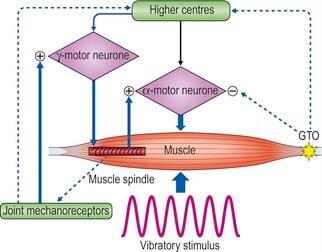
How controlled mechanical vibration influences muscle activation, circulation, proprioception, mechanotransduction, and clinical decision-making.
Whole-body vibration is not a single biologic effect. It is a controlled mechanical stimulus delivered through the body at a specific frequency, amplitude, and acceleration. Depending on how that signal is applied, vibration may influence neuromuscular recruitment, postural control, circulation, tissue loading, and cellular signaling. That is why different vibration platforms can serve very different clinical purposes.
What Is Whole-Body Vibration? How Vibration Works in the Body
Whole-body vibration uses a platform to introduce rapid mechanical oscillations into the body through the feet or another point of contact. Those oscillations matter because the body is built to sense force, interpret force, and respond to force. Muscles, tendons, joint structures, skin mechanoreceptors, blood vessels, and bone cells all respond to mechanical input in different ways.
For healthcare providers, the most useful question is not whether vibration works. The more useful question is what type of signal is being delivered, at what dose, and to which patient. Frequency, amplitude, acceleration, body position, and session duration all influence the physiologic response. In that sense, vibration should be viewed as a dosing strategy rather than a generic category.
High-Intensity and Low-Intensity Vibration Are Not the Same
Not all vibration platforms create the same mechanical experience. High-intensity and low-intensity vibration should not be grouped together as though they serve the same purpose. The right choice depends on the patient, the clinical objective, and the type of signal being delivered.
High-Intensity Vibration
High-intensity vibration is generally used when the goal is stronger neuromuscular activation, visible muscular engagement, postural challenge, conditioning, or performance-oriented rehabilitation. It is often the better fit when clinicians want a more active training response.
Low-Intensity Vibration
Low-intensity vibration is generally used when the goal is lower-load mechanical signaling, supportive skeletal input, or use in populations where tolerance and loading capacity are major considerations. It is often discussed in connection with aging, fall prevention, balance support, and bone-health applications.
Bottom line:
The best vibration platform is the one that delivers the right mechanical signal for the right patient.
Why the Science Matters
One of the most important concepts in vibration therapy is mechanotransduction, the process by which cells sense mechanical force and convert it into biologic activity. This helps explain why vibration is relevant not only for visible movement and muscle activity, but also for tissue signaling at the cellular level.
This distinction is especially important when comparing higher-intensity and lower-intensity vibration. One may emphasize overt neuromuscular challenge, while the other may emphasize lower-load signaling and supportive skeletal input. Both rely on the body’s ability to interpret mechanical information.
Clinical studies and research using whole body vibration indicate the following beneficial effects of vibration on tissues and cells.
- Rehabilitation post-surgery, illness, sports injury
- Neuromuscular re-education
- Neuropathy Symptom Management
- Balance and Fall Prevention
- Sarcopenia Support
- Increase muscle strength and power
- Improve proprioception
- Improve range of motion
- Bone Health
- Circulation and Lymphedema
- Pain Relief, including arthritis
- Athletic Conditioning
- Weight Loss
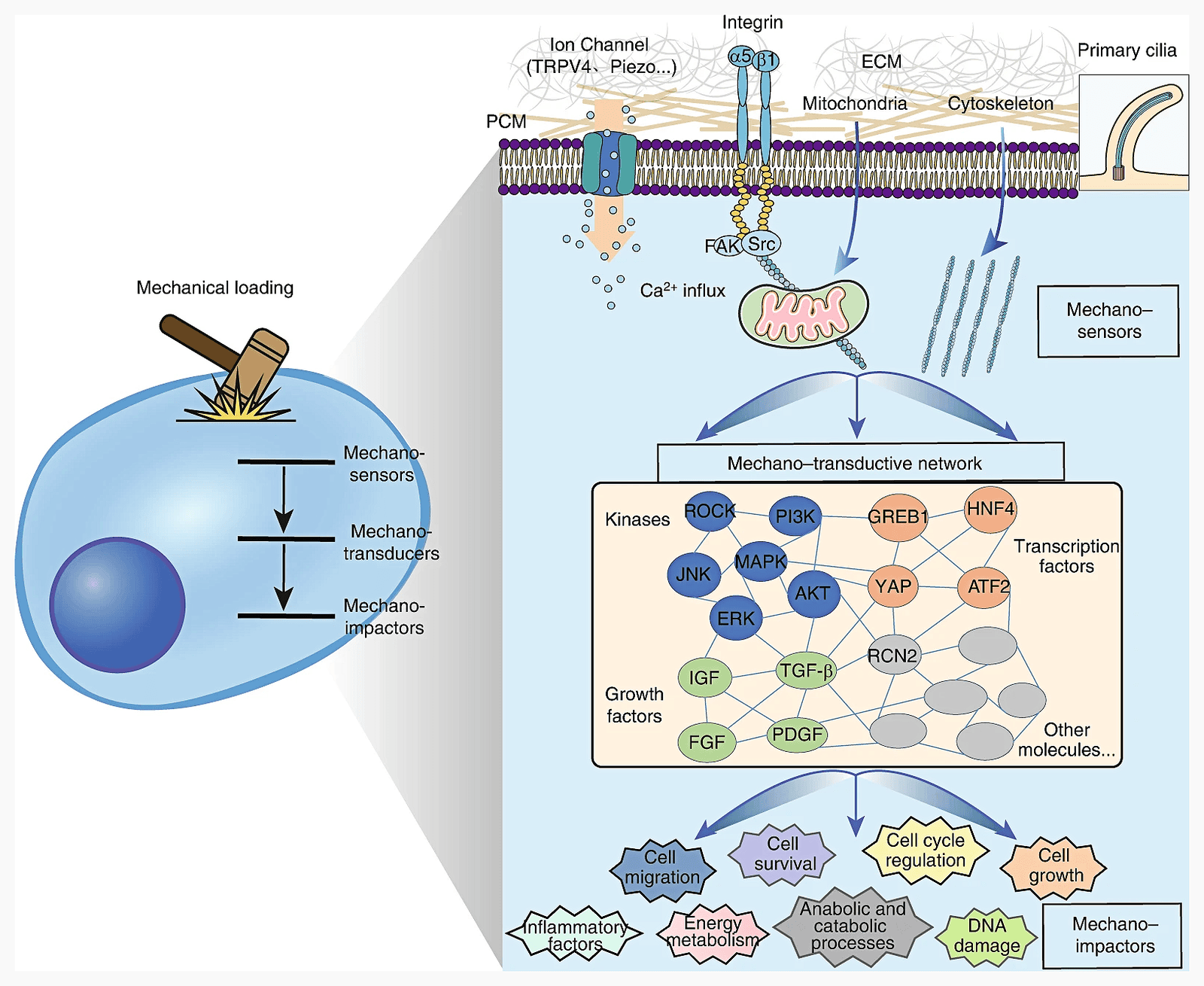
When a patient stands, shifts, squats, or performs other movements on a vibration platform, the platform introduces mechanical acceleration into the body. That signal travels through soft tissue, muscles, joints, and bone. In some cases, the response is immediate and visible, such as increased reflexive muscle activity or postural challenge.
In other cases, the response is subtler, involving fluid movement, cellular deformation, or mechanosensitive signaling pathways inside tissue. This is why vibration should not be reduced to a single claim such as strength, circulation, or balance. A vibration platform is better understood as a mechanical input device.
Key mechanisms include: neuromuscular activation, circulation, mechanotransduction, and bone-related mechanical signaling.
Continue Exploring the Science
For clinicians who want to go deeper, these articles explore vibration therapy from several practical and scientific angles.
GENERAL KNOWLEDGE
Whole Body Vibration (WBV) Therapy
The Science of Mechanotransduction and Vibration Therapy
How Vibration Platforms Support Neuromuscular Re-Education
Whole Body Vibration and the Cell's Mechanical Communication System
HIGH-INTENSITY VIBRATION
High-Intensity Vibration for Improving Gait and Functional Mobility
High-Intensity Vibration in Sports Medicine and Performance Rehabilitation
Why High-Intensity Vibration Outperforms Passive Modalities in Rehabilitation
Clinical Evidence Supporting High Intensity Whole Body Vibration: What the Research Shows
LOW-INTENSITY VIBRATION
Low-Intensity Vibration for Fall Prevention and Senior Rehabilitation
Low-Intensity Vibration and Stem Cell Differentiation
Low-Intensity Vibration For Sarcopenia
Low-Intensity Vibration and Microcirculation
Not Sure Which Vibration Platform Fits Your Practice?
Energia Medical can help you compare high-intensity and low-intensity vibration platforms based on patient population, clinical goals, available space, and workflow needs.